
Contractor Competency Verification: The Audit Gap Hiding in Your Service Providers' Training Records

A contractor can hold a current training certificate and still struggle to demonstrate what the work requires.
That is the audit gap: completion records show that training happened, but they do not always prove that a person retained the knowledge and can perform the task.
For HSE managers and operations leads, contractor oversight makes this harder. Your organization may not own a service provider’s training program, but you still need to verify that contractor personnel can perform the safety-critical duties assigned to them.
Why contractor training records deserve a closer look
A recent offshore inspection illustrates why a certificate alone may not settle the question.
In an August 2026 Safety Alert on Production Safety System Training, the Marine Minerals Administration described a performance-based risk inspection covering 16 assets operated by 11 operators. Inspectors administered 53 written tests. The average score was 80.34, with results ranging from 63.1 to 91.6. Thirty-eight percent of those tested scored below 80%, and 9% scored below 70%.
The alert also described a notable difference between training-provider test results and regulator testing: offshore personnel averaged 95.49 on provider tests, but the same employees averaged 80.8 on the regulator’s test.
Those findings do not mean every provider or contractor has a problem. They do show why operators need a way to check whether training evidence reflects retained knowledge and demonstrated capability.
Completion answers one question, not every question
A course record can confirm that someone completed an assigned module. It may not show whether the person understands the system, can explain a critical requirement, or can apply the knowledge during a task.
The regulator’s findings included gaps in knowledge of safety-device set points, flowline requirements, gas-detection alarms, and other production safety topics. Inspectors also observed an operator with less than three years of experience who had never completed a full production safety training course, as well as an operator with expired production safety training certification.
These examples point to a practical distinction: training completion is evidence of participation; competency verification is evidence of what a person knows and can do.
Contractors are part of the verification scope
Under 30 CFR Part 250, Subpart O, the operator’s training plan must cover procedures for evaluating contractor training programs and verifying that employees and contractor personnel can perform assigned production-safety duties.
The rule also requires the operator to ensure contractor training programs provide periodic training and verification of knowledge and skills. The operator may use training from any source that meets its plan, but the source does not remove the need for appropriate oversight.
In practice, contractor verification means looking beyond whether a file exists. It means checking whether the training aligns with the role, whether assessments test relevant knowledge, whether results are understood, and whether records remain current.
What a contractor record should help you establish
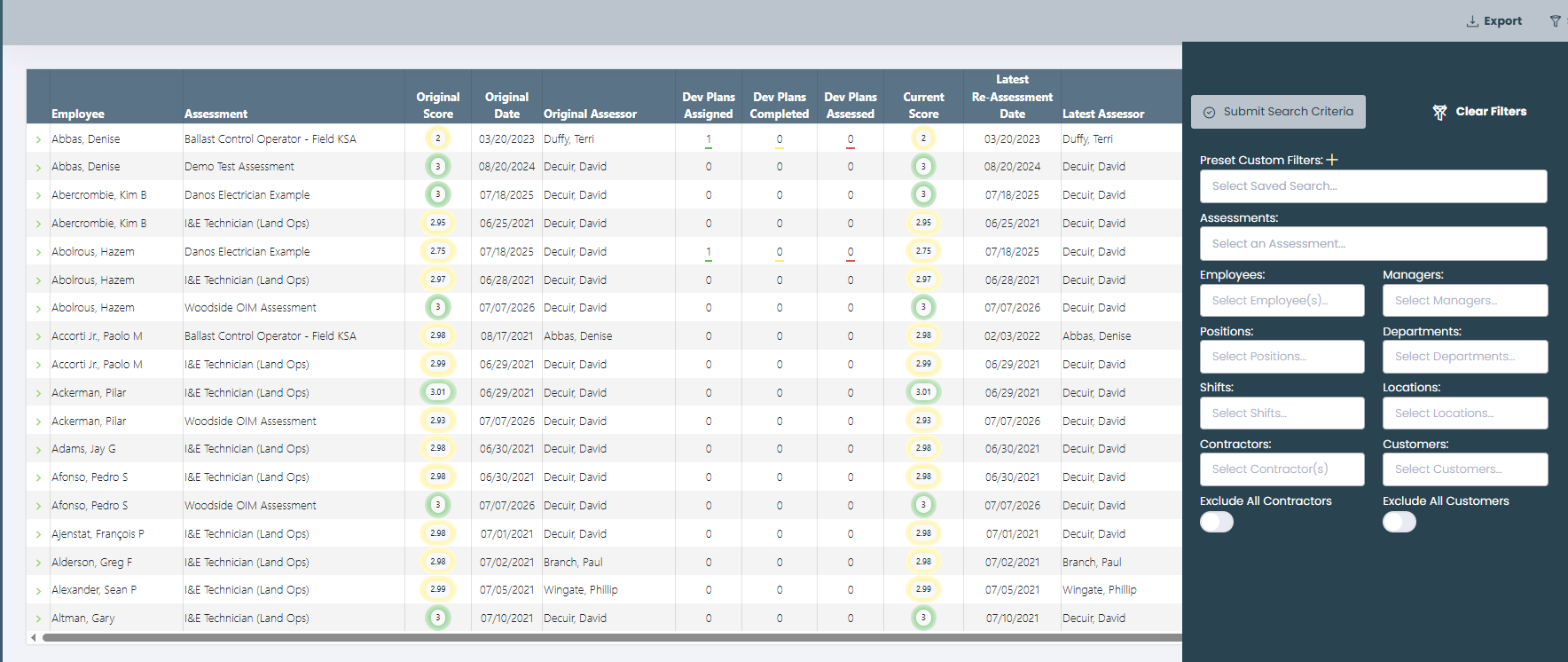
An audit-ready record should make it possible to identify the person, employer, role, required qualification, training provider, completion date, assessment evidence, and current status.
For recurring qualifications such as production safety training, the record should also show the applicable renewal or requalification date and make approaching expirations visible. The Safety Alert recommends reviewing production safety training frequency against the three-year industry standard. Treat this as a regulator recommendation, not a universal interval stated in Subpart O itself.
A certificate can be part of the evidence. It should not automatically be the whole evidence.
Four checks that strengthen contractor competency verification
1. Verify the provider’s program
Review how the provider defines course objectives, tests understanding, and evaluates performance. Consider whether the course content matches the duties contractors perform at your sites and whether the provider periodically reviews its materials and practices.
The Safety Alert specifically recommends evaluating production safety training providers and assessing instructor qualifications and training practices. That review can help identify a mismatch between the provider’s completion criteria and the knowledge your operation expects.
2. Check what assessments measure
A passing score is useful only when you know what the test covers and what the score means.
Compare provider test content with the operational requirements and regulator expectations that apply to the role. When the work calls for practical skill, include an appropriate demonstration or hands-on assessment rather than relying on a knowledge quiz alone.
Subpart O allows the regulator to assess training through audits, interviews, written or oral tests, and hands-on, simulator, or live-well testing. An operator’s verification process should be capable of producing meaningful evidence, not just a completion status.
3. Track qualifications and expirations
Contractor rosters change. People move between employers, roles, sites, and subcontractors. A record that was accurate at onboarding can become incomplete or out of date.
Track qualification status against the person’s current role and flag approaching expirations early enough to plan renewal. That is especially important when contractors perform safety-critical duties and several employers or subcontractor tiers contribute personnel.
4. Keep the evidence connected
A defensible record should show the path from requirement to action: what competency was required, what training was assigned, how the person was assessed, what the result showed, and what happened next if a gap appeared.
If an assessment identifies a shortfall, record the follow-up training, reassessment, and resulting status. This creates a clearer basis for decisions than a folder of disconnected certificates, spreadsheets, and emails.
How competency tracking software can close the visibility gap
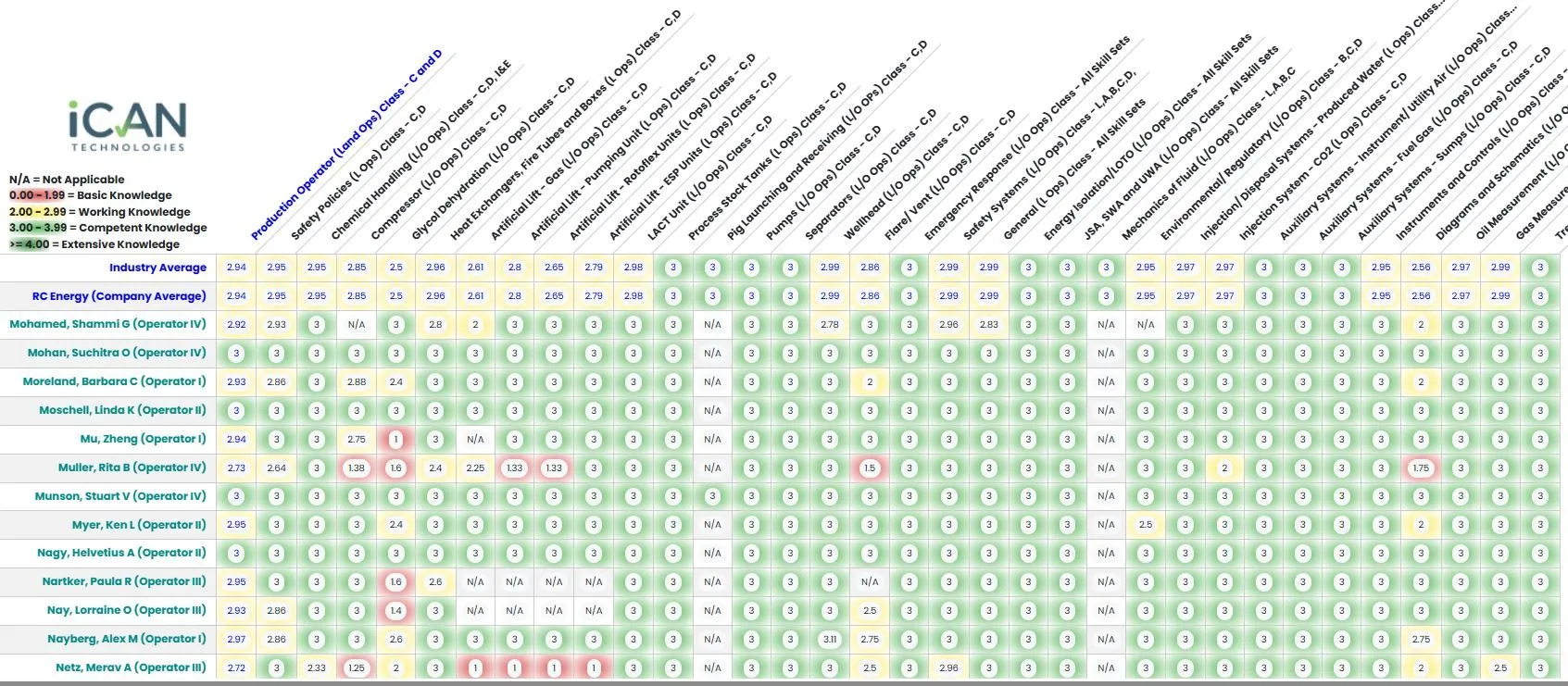
When contractor information sits across spreadsheets, provider portals, and separate learning systems, it can be difficult to see who is qualified for what work and where evidence is missing.
A competency management system can centralize employee and contractor profiles, role requirements, assessment evidence, and development needs. With competency tracking software, managers can review current status across roles and teams instead of rebuilding the picture during an audit.
A connected learning management system can link assigned training and completion records with certification status, due dates, assessments, and an audit trail. The goal is not simply to collect more data. It is to make the evidence easier to review and act on before a finding exposes a gap.
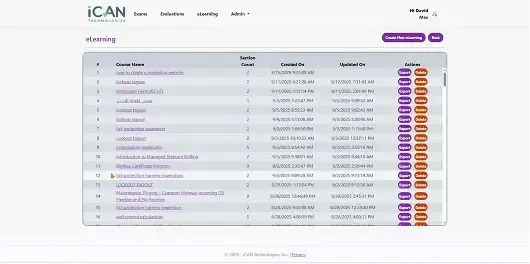
Software does not replace operator judgment or hands-on verification. It can make it easier to identify missing records, monitor renewal dates, compare assessments with role requirements, and follow corrective actions through to reassessment.
Make the audit question easier to answer
When someone asks whether a contractor is competent for an assigned duty, a completion report may not be enough.
A stronger answer connects the requirement to current qualifications, relevant assessment evidence, and documented follow-up. That is the difference between recording that training occurred and showing how readiness was verified.
Book a demo to see how iCAN connects training records, competency evidence, and qualification status in one workforce development system: https://icantech.ai/get-demo.
FAQ
What is contractor competency verification?
Contractor competency verification is the process of confirming that contractor personnel have the required training, retain relevant knowledge, and can perform the duties assigned to them. It includes reviewing training programs, qualifications, assessments, and supporting records.
Does 30 CFR Subpart O include contractor personnel?
Yes. Subpart O defines contract personnel and requires the operator’s training plan to include procedures for evaluating contractor training programs and verifying that contractor personnel can perform assigned production-safety duties. It also requires contractor training programs to provide periodic training and verification of knowledge and skills.
Is a training certificate proof of competency?
A certificate can show that a person completed a course or met a provider’s requirements. By itself, it may not demonstrate retained knowledge or the ability to perform a safety-critical task. Operators should consider the assessment criteria and task-relevant evidence.
How often should production safety training be renewed?
The 2026 Safety Alert recommends reviewing production safety training frequency to ensure it aligns with the three-year industry standard. Subpart O requires periodic training and procedures to verify knowledge retention, but the alert’s three-year recommendation should not be described as a universal interval expressly set by the rule.
What contractor records should an operator track?
Operators should track personnel identity, employer, role, required training and qualifications, provider, completion date, assessment evidence, and current certification status. For qualifications with renewal dates, records should also make upcoming expirations and overdue requirements visible.
How can competency tracking software support an audit?
Competency tracking software can centralize contractor and employee records, connect requirements with assessments and results, flag expirations, and preserve a traceable record of follow-up actions. It supports audit preparation by making evidence easier to locate and review.